
4-in-1 Neck Phototherapy Laser Device: Your At-Home Solution for Healthy Blood & Vascular Care
- winni
- July 07, 2026
- 224
- 0
- 0
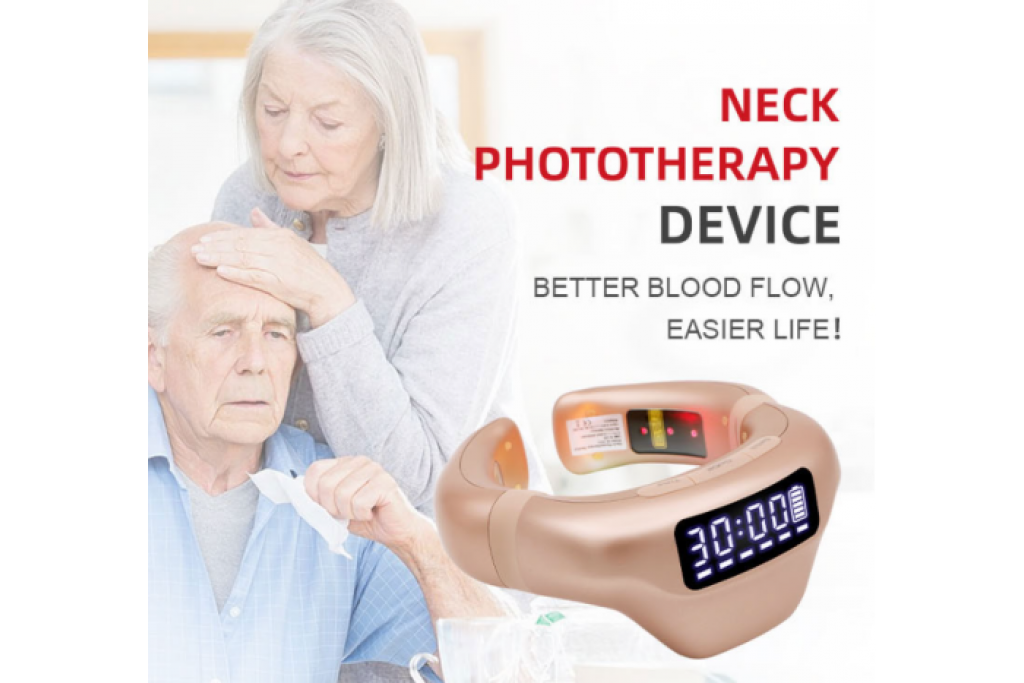
Deep Vascular Nourishment & Stabilisation of the “Five Highs” – Intercepting Cardiovascular & Cerebrovascular Crises at Their Source
Opening: A Sobering Global Health Snapshot
According to the World Health Organization (WHO) Global Health Statistics Report 2023:
Cardiovascular diseases (CVDs) claim approximately 17.9 million lives annually, accounting for 32% of all global deaths – the undisputed No.1 killer.
In China, CVDs contribute to over 40% of all deaths – meaning 2 out of every 5 deaths are related to heart or brain vessel disorders.
High blood viscosity, hyperlipidaemia, and hyperglycaemia are the three independent major risk factors for acute myocardial infarction and cerebral infarction. Alarmingly, they are growing younger – over 45% of adults aged 30–50 now show subclinical vascular lesions.
Critical warning: Blood vessels can be over 70% blocked before obvious symptoms emerge. Yet long before that, the body sends countless subtle signals – dizziness, neck stiffness, tinnitus, blurred vision. Unfortunately, most people choose to “tough it out.”
I. Your Blood Vessels Are Under Silent Strain
1. Metabolic Syndrome – The “Five Highs” Stack Up
Hypertension, hyperglycaemia, hyperlipidaemia, high blood viscosity, and hyperuricaemia (clinically often referred to as the “five highs”) do not exist in isolation. They form a vicious cycle:
Hyperlipidaemia → lipid deposits on vessel walls → atherosclerotic plaque formation.
High blood viscosity → red blood cell aggregation → increased flow resistance → microcirculatory stasis.
Hyperglycaemia → advanced glycation end‑products damage vascular endothelium → reduced elasticity and increased fragility.
Hypertension → high‑velocity blood flow exacerbates plaque rupture risk → directly triggers infarction.
2. Early Warning Signs – A Self‑Check List
If you or your family members have recently experienced two or more of the following symptoms, your systemic circulation is already flashing a “yellow light”:
☐ Morning dizziness, afternoon drowsiness (indicating overnight blood thickening)
☐ Transient blackouts or blurred vision when squatting or standing up
☐ Unexplained tinnitus or hearing decline
☐ Stiffness and soreness at the back of the neck, with “clicking” sounds during movement
☐ Chest tightness, palpitations when climbing stairs or walking briskly
☐ Cold hands and feet, dull skin tone, or unexplained bruising
II. Why Choose Physical Light Therapy? – A Comparison with Traditional Interventions
| Intervention | Advantages | Limitations |
|---|---|---|
| Oral medication | Targeted, rapid effect | Long‑term use; liver/kidney burden; drug resistance; side effects |
| Diet & exercise | Root‑cause approach; no side effects | Slow results; poor compliance; limited effect on established plaques |
| IV infusion (“vessel cleansing”) | Rapid short‑term blood dilution | Cannot be repeated frequently; only addresses surface symptoms |
| 4‑in‑1 light therapy (physical modality) | Non‑invasive, drug‑free, no toxicity – can be applied daily; improves blood rheology at the cellular level | Requires regular use; cumulative effect over time |
Conclusion: Light therapy is the only non‑invasive home‑based modality that simultaneously acts on blood rheology, vascular endothelial function, and cellular energy metabolism.
III. Core Product Highlights – Full Details
1. One Device, Multiple Applications
Beyond neck therapy, the interchangeable accessories target nasal mucosa, ear canal walls, and acupoints/body surfaces. A single device fulfils vascular conditioning + cervical relaxation + nasal/ear care – all in one.
2. Pure Green Physical Therapy – Zero Harm
The device employs 650nm low‑level laser and visible light bands – producing no thermal damage, no ionising radiation. Apart from pregnant women and those preparing for pregnancy, the vast majority of chronic disease patients can use it safely.
3. Ultra‑Clear HD Full‑View Display
A 2.4‑inch IPS high‑definition colour screen shows treatment time, remaining battery, and light mode in large fonts – no reading glasses needed; clearly visible even at night.
4. High‑Capacity 1500mAh Battery
Fully charged in just 2.5 hours, providing up to 180 minutes of continuous operation. At two 30‑minute sessions per day, one full charge lasts 3 full days.
5. Revolutionary Ergonomic Neck‑Worn Design
Constructed with food‑grade soft silicone + lightweight ABS shell – total net weight only 86 grams. The self‑adjusting elastic bracket fits neck circumferences from 28 to 46 cm (all adult sizes). You can walk, do housework, or work at your desk while wearing it – truly “therapy on the go.”
IV. In‑Depth Working Principle – How 650nm Laser “Cleanses” Your Blood (Biomedical Analysis)
The core light source is a 650nm ± 10nm semiconductor laser, with a stable output power of 5mW (Class IIIR, safe and non‑invasive). Its action proceeds in three phases:
Phase 1: Photon Absorption & Energy Conversion
Laser photons penetrate the carotid skin and vessel wall, where they are specifically absorbed by haemoglobin (Hb) inside red blood cells (RBCs) circulating in the blood. The photon energy is converted into intracellular bioenergy, which restores the negative charge density on RBC membranes – thereby disaggregating “rouleaux formation” (the microscopic hallmark of elevated blood viscosity).
Phase 2: Enzyme Activation & Biological Regulation
The absorbed energy activates several key enzymes:
Superoxide dismutase (SOD) activity increases → scavenging oxygen free radicals, slowing vascular endothelial ageing.
Lipoprotein lipase (LPL) and lecithin‑cholesterol acyltransferase (LCAT) → accelerate the catabolism of low‑density lipoprotein (LDL, “bad” cholesterol) in the blood.
Na⁺‑K⁺‑ATPase → repairs damaged RBC membranes, enhancing cell deformability (allowing RBCs to pass smoothly through capillaries as narrow as 3–5 μm in diameter).
Phase 3: Systemic Circulatory Clearance
The laser bio‑effects reach the entire peripheral circulation within 30 seconds. With sustained use, the following clinical outcomes are observed:
Haemorheological improvement: whole‑blood relative viscosity reduced by 15–25% (controlled clinical data).
Lipid metabolism optimisation: triglycerides (TG) and total cholesterol (TC) steadily decline.
Enhanced oxygen delivery: blood oxygen saturation (SpO₂) increases by an average of 2–4%, significantly improving cerebral and myocardial oxygen supply.
V. Differentiated Actions of Four Visible Light Wavelengths (In‑Depth Photobiological Interpretation)
In addition to the core laser, the device integrates four colour LED modules – each with distinct cellular targets:
| Light Colour | Wavelength Range | Cellular/Molecular Target | Detailed Physiological Effects |
|---|---|---|---|
| Red (630–660nm) | Mitochondrial cytochrome c oxidase | ① Promotes ATP synthesis, boosting cellular energy metabolism; ② Enhances macrophage phagocytosis, resolving local sterile inflammation; ③ Stimulates fibroblast proliferation, accelerating collagen deposition for soft‑tissue repair. | |
| Yellow (590nm) | Mitochondrial complex III | ① Activates melatonin and serotonin precursor conversion, regulating circadian rhythms and improving sleep quality; ② Enhances hepatic detoxifying enzyme activity, aiding clearance of bilirubin and metabolic waste; ③ Clinically used as adjunctive therapy for depression. | |
| Green (520nm) | Haemoglobin ferrous ions | ① Binds directly to haem – allosterically modulates oxygen affinity (Bohr effect enhancement); ② Reduces lactic acid accumulation in muscle tissue, relieving post‑exercise fatigue; ③ Increases RBC membrane fluidity, reducing shear stress in blood flow. | |
| Blue (470nm) | NADH dehydrogenase (complex I) | ① Induces nitric oxide (NO) release – potently vasodilates and lowers blood pressure; ② Upregulates telomerase activity, delaying vascular endothelial cell telomere shortening (anti‑ageing mechanism); ③ Suppresses pro‑inflammatory cytokines (e.g., TNF‑α, IL‑6). |